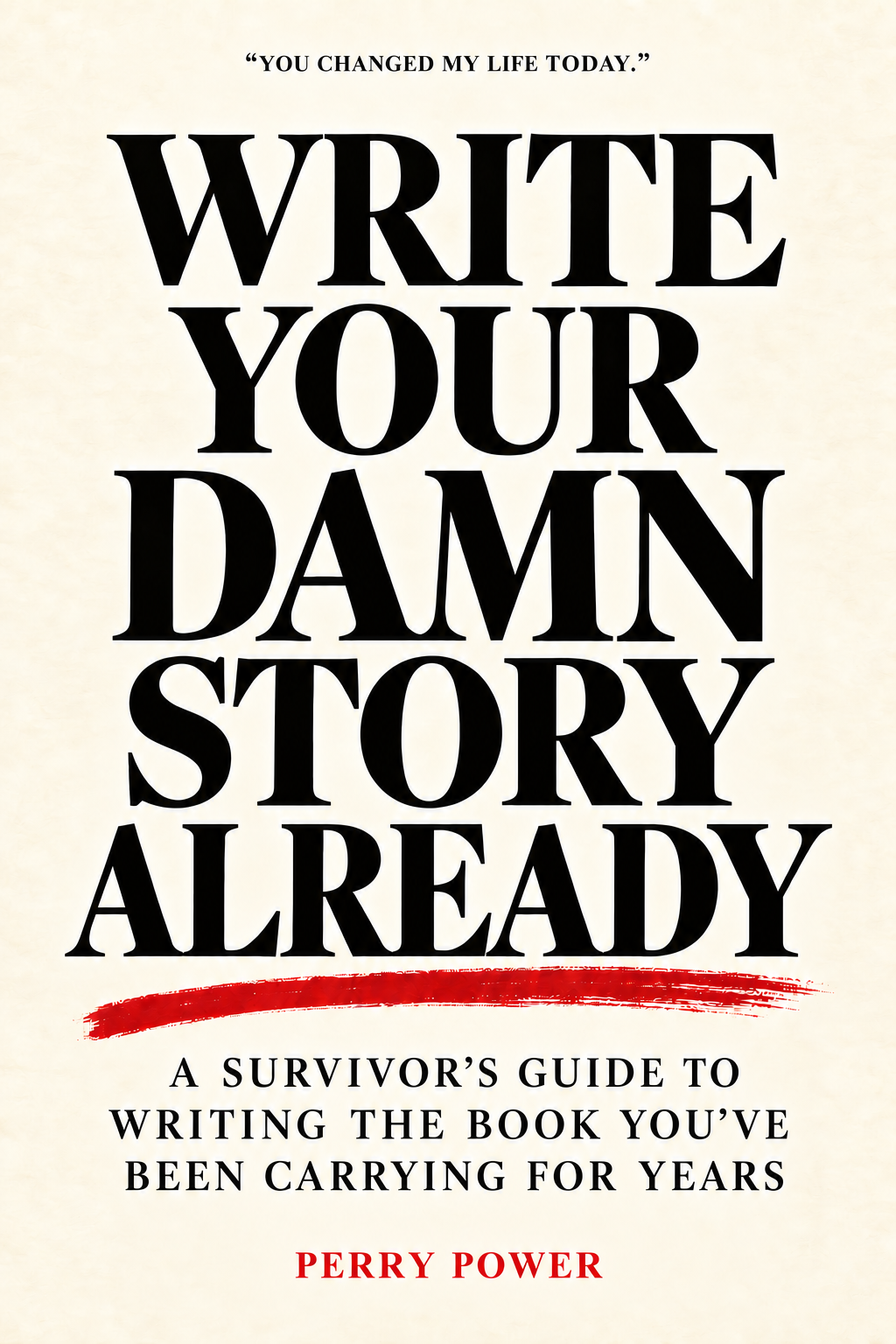
Turn The Life Story You've Been Carrying Into A Powerful Book
Discover the simple process that takes you from a lifetime of memories to a clear story, a finished manuscript, and a book you can finally hold in your hands (even if you don't consider yourself a writer or have no idea where to start).
"Never would I even have considered doing something like this a year ago."
— Kari, Author of the war in my "happy" place
★★★★★
"The day my book went live a girl downloaded it on Kindle and read it that day."
— Andrea, author of sacrificial girl
★★★★★
"Being able to look back on experiences with fresh eyes instead of being stuck in the past is phenomenal."
— Glenn, author of embracing (cwtch-ing) me, god and others
You Have a Story Worth Telling
Maybe you have tried to write it before. Or maybe you have been carrying it for years, waiting for the right moment to begin.
Either way, something stops you.
For some people, it happens the moment they sit down to write. They pull up a blank page, reach for the first memory, and then another appears behind it. And another. Before long, they are trying to untangle an entire lifetime in one sitting.
For others, the stopping happens before a single word is written. Then the questions arrive:
Where do I even start? What am I actually trying to say? What will my family think?
So the story stays where it has always been. In a folder, a scrapbook, a drawer, or scattered across years of journals and notes. Or simply in your head, waiting.
Each time the idea resurfaces, it can feel heavier than before. You might be waiting for more time, more confidence, or the day you finally feel ready.
And somewhere along the way, a thought appears:
Maybe I just can't do this.
If that sounds familiar, nothing has gone wrong. I've watched this happen to so many people that I gave it a name:
The Silence Spiral.
Your story was never the problem.
What's missing is a structure for the decisions that writing asks you to make before a single good sentence is possible:
- What is this book really about? - Who is it for? - What am I willing to share? - What do I want the reader to understand?
Without those answers, every sentence can feel like a judgement on your entire life.
And that is too much pressure to put on a blank page.
The Shocking Truth About Why You're Still Stuck
It's easy to blame the blank page.
But the blank page isn't what's stopping you. Trust me.
I've spoken to hundreds of survivors who've been sitting on their story for months. Years. Decades, in some cases. And the same fears come up every single time. Not one of them. All of them, stacked on top of each other.
I don't know where to start.
You open a doc, stare at it, write a few lines, edit them, re-edit them, decide they're crap, and then close the laptop. But know that's not a talent problem. It's a structure problem. And structure problems have solutions.
What will people think of me?
What if my family reads it? What if he finds out? What if people who know me look at me differently? This fear doesn't announce itself. It just keeps you tweaking the outline for another six months instead of writing chapter one.
Who am I to write this?
You look at the books already out there and you think that those authors seem more polished than you. More healed. More sure of themselves. More confident. And that little voice goes, "You're not a writer. You're not even done working through it yet." So you wait until you feel ready.
What if I actually finish it and then have to publish it?
The idea of the book feels safe. The actual book, with your name on the cover, out in the world where anyone can read it? That's a different thing entirely. I've watched people slow right down a few chapters from the end without even realising why. Because finishing means it's real.
None of these fears mean you're not ready. They mean you're human, and you're about to do something that actually matters.
One of my clients, Sarah, wanted to write her book for two years. She tried it on her own and kept getting stuck. Then once she had a clear structure to follow and people around her, she wrote her chapters out in 30 days.
She didn't turn into a different person. She didn't stop caring what people thought.
She just stopped trying to make every decision on her own. And she stopped carrying the fear on her own too.
That's the bit most writing advice completely misses. It's all about craft. It says nothing about the guts it takes to keep going when every one of those voices kicks off at once.
A clear method sorts out "where do I start?" The right people sort out the rest.
You don't have to show up without fear. You need a story, a structure, and people who won't let you quit.
Why Writing Alone Is Not Enough
You already know that writing helps. Whether it's journaling, poetry, or notes on your phone, you have felt the small release that comes when words finally land on a page.
But there is a difference between writing to survive and writing to be seen.
Private writing gives you a place to put the weight down for a moment. A book asks you to shape that weight into something another person can pick up, understand, and carry forward in their own life.
That gap between journaling and a finished book is where most people stop. Not because they lack courage. Because no one has shown them a path across it.
The common advice goes like this:
Set a word count. Push through the resistance. Write every morning before breakfast.
Try forcing yourself to write 500 words about a memory you are not ready to face.
Day one, you feel proud that you have started.
Day three, you push too far and the words feel too heavy to carry.
By day seven, you are wondering whether you were ever meant to do this.
More pages do not answer the question that sits underneath everything:
What is this book actually for, and am I ready to let people read it?
That question is not a writing problem. It is a visibility problem. The fuller expression of what writing can do for you, and for the people your story could reach, only becomes available when you allow yourself to be seen.
Until then, the book stays half-formed. The voice stays private. And the people who most need to find your story cannot find it.
You do not need more prompts or another course. You need a process that helps you understand what this book is truly about, who it is for, and how to step into the visibility that makes it real.
See, I Was Just Like You…
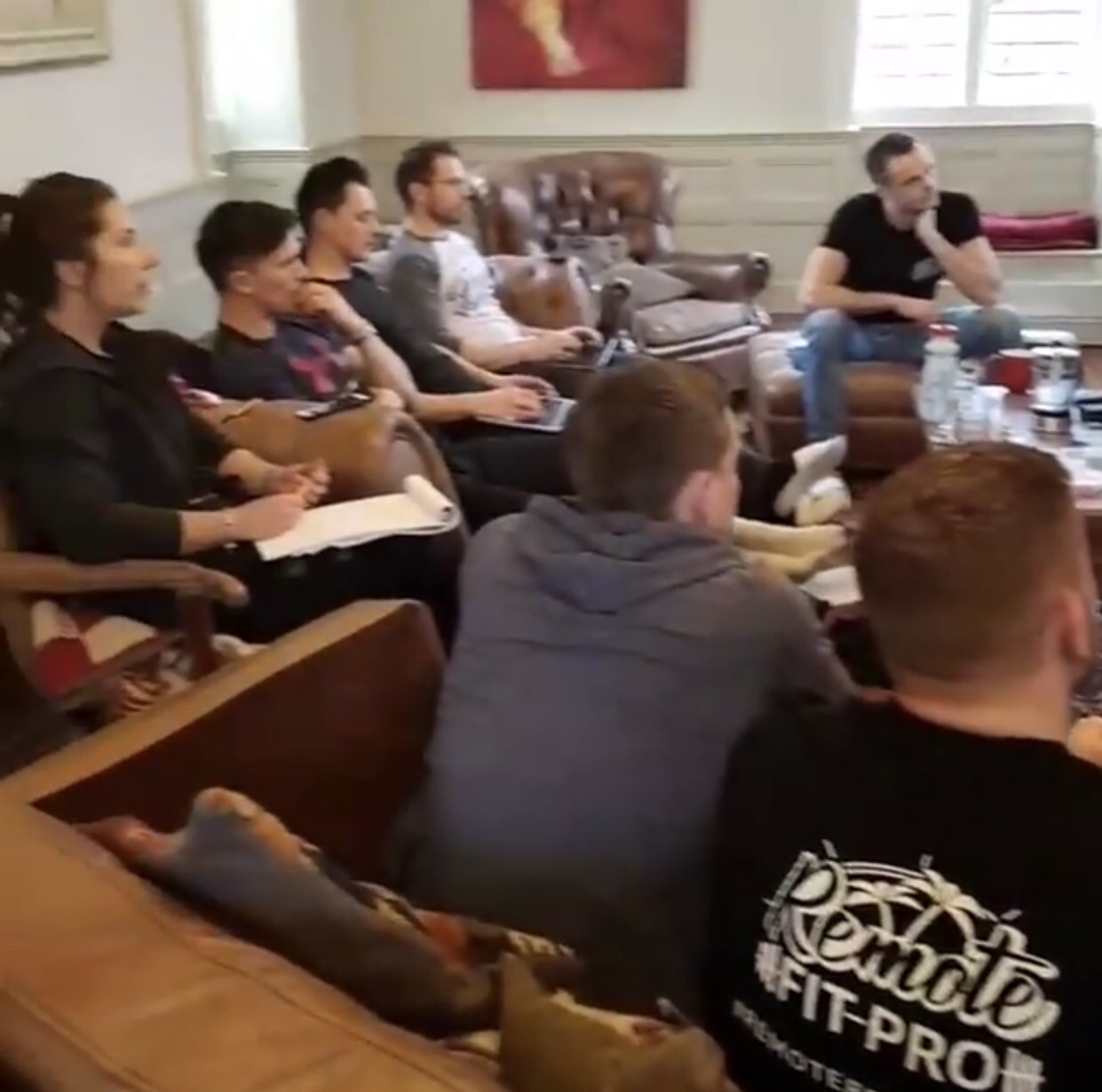
The first time I spoke about the abuse, it was to my ex-girlfriend. Then, a couple of months later, it was to a room full of strangers at an event (that's me wearing the hoodie, with my back to the camera).
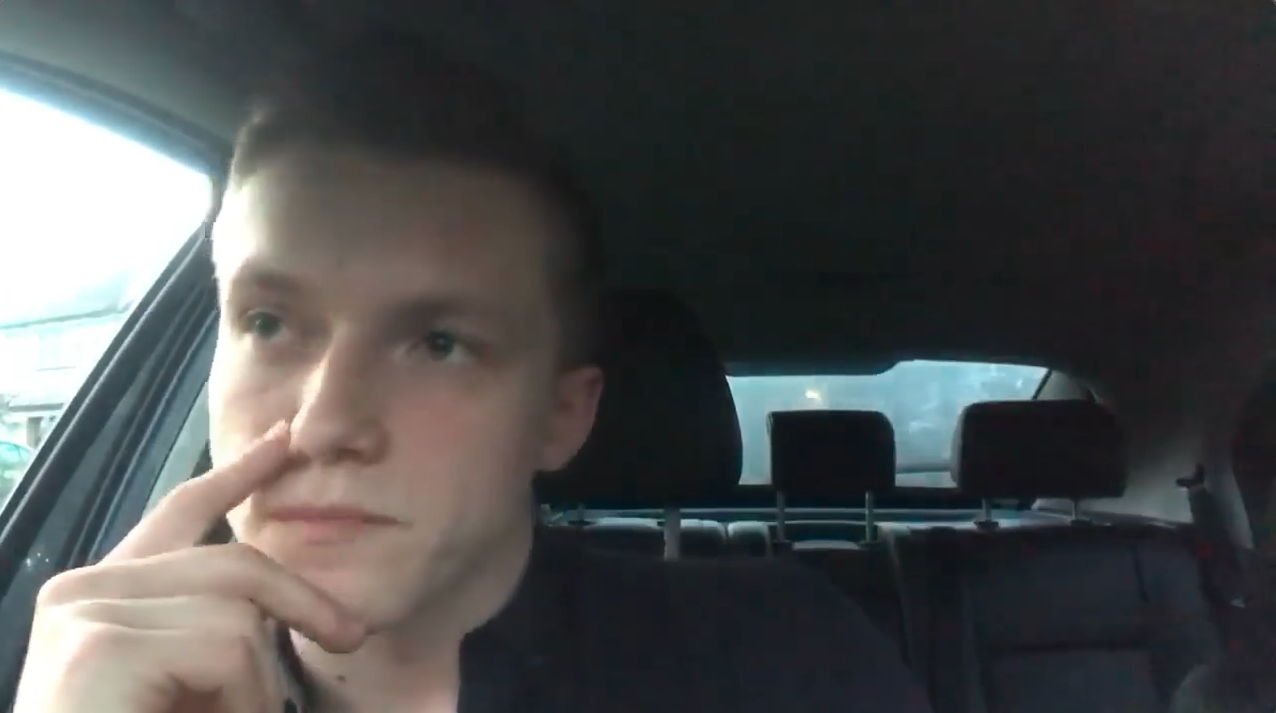
And on the drive home from that event, I decided I needed to say it publicly. And you best believe that the voice in my head was trying everything it could do to stop me.
I knew what would happen if I made it home first. I'd say hello to my dog, Amara, catch up with friends, and talk myself out of it. So I turned left without indicating, pulled over, and hit record.
But I stopped after a few seconds. Tried again. Stopped. Tried another five times.
Then, on the seventh take, that's the one I posted on Facebook.
Sixty-seven views, two comments, and a voice screaming at me to delete it. I threw the phone in the back seat and blasted Elvis through the speakers, trying to drown out the voice.
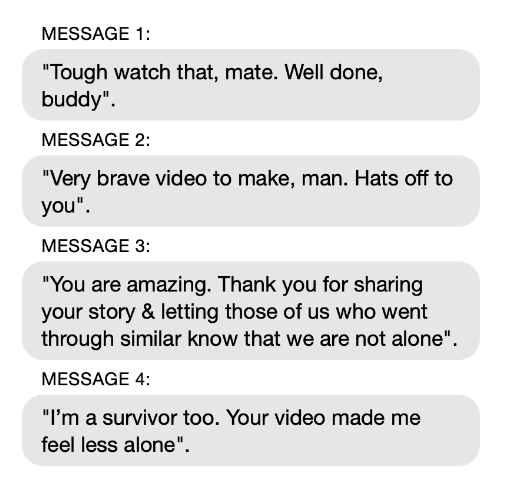
When I pulled up outside the house, the screen was full of messages:
Not long after, I was sitting in my aunt Tracy's front room, next to my cousin (Kelly), when she told me that they had watched the video.
As I squirmed with embarrassment, she said:
"You know you weren't the only one who was abused by him, right?"
"I know Kelly was," I replied.
"Your dad too," she said.
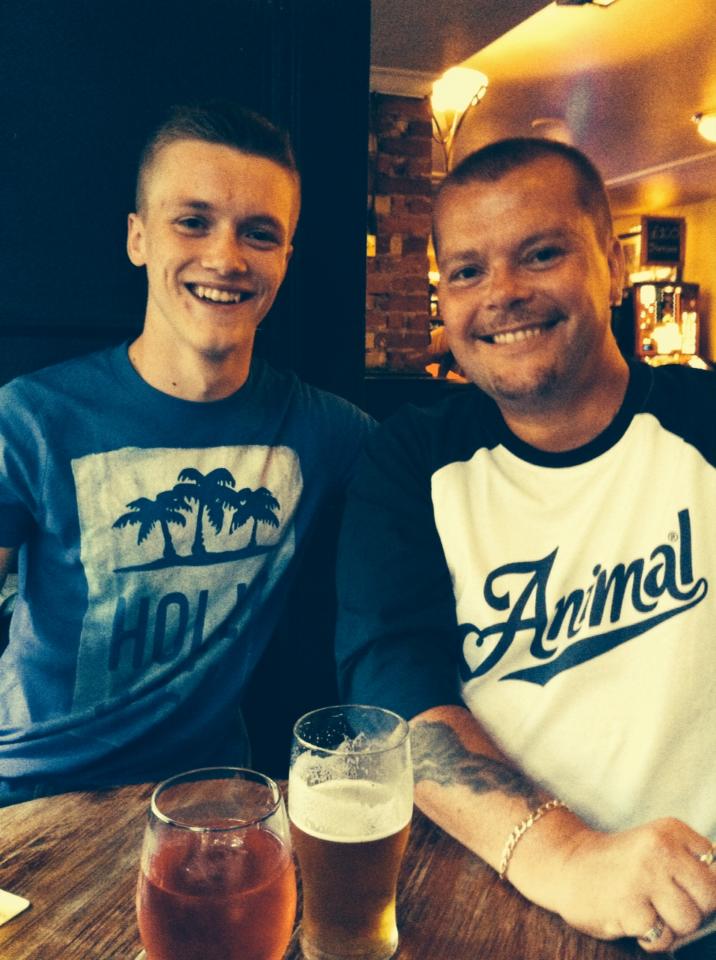
And that's when everything connected. Why he told me to stay silent. The vodka. The tiny empty bottles my step-mum found after he'd gone, in his wardrobe, under the bed, behind the car seat. Why he died at 48.
His silence didn't protect him. It killed him.
Fast-forward a few years, and I was broke in Portsmouth, sleeping on the floor in a sleeping bag and sharing my dinner with Amara.
My story was spreading online, and I decided to write a book. Publishers and agents gave me nothing. Indie publishers quoted £15,000 to £25,000 (which, obviously, I didn't have).
And with no other option, I decided to write it anyway. And in 30 days I had a finished book.
But I then sat on it for a year, too scared to have my truth, in its rawest form, go out there into the world.
Then one day I had a surge of "fuck this" confidence and decided to figure out how to self-publish it.
And within 2-3 days, I edited it, formatted it, designed the cover, and published it.
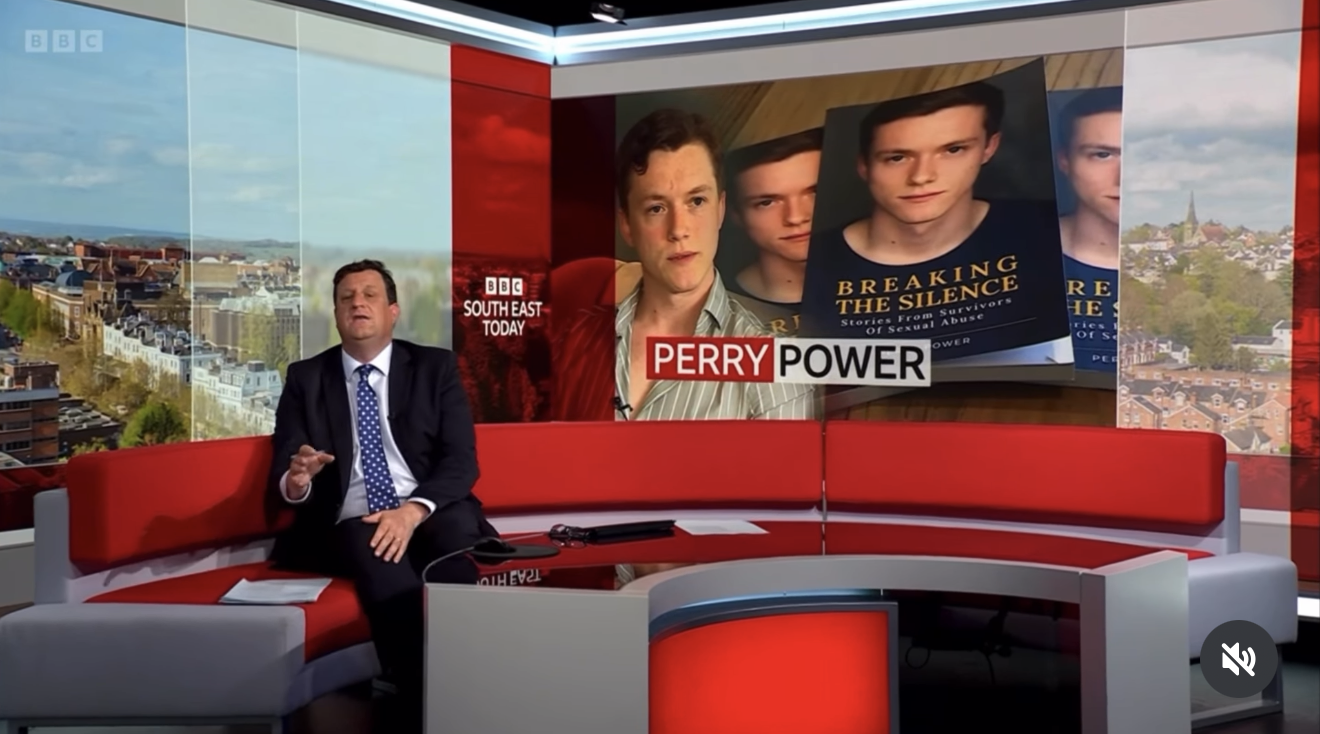
It went on to hit #1 in the sexual abuse category on Amazon, sell over 7,000 copies, and get picked up by the press.
And this is proof that beneath it all, our fears are what stop us from progressing forward and doing what needs to be done.
"We can't control what's happened to us, but we can control how we want to use it. And I choose to use it as a way to help others feel less alone with what they've been through".
— Perry Power
The Compass Revolution
Most books stall not because the writer lacks a story, but because the writer doesn't yet know who the story is for.
The moment that ONE person comes into focus, everything changes. The second-guessing quiets. The chapters that felt impossible start to write themselves. Getting clear on that one reader is what finally moves a book from a folder on a laptop into the world.
That one reader is what this book calls your Story Compass.
Whenever you get lost mid-chapter, mid-sentence, mid-doubt, you look at the Compass. It tells you what stays and what goes. It tells you which memory belongs in the book and which is marble to chip away. Your story already exists inside you. The Compass shows you where to look.
It starts with one sentence:
“I’m writing this book for ________, so they understand ________.”
Something like: “I’m writing this book for someone who still carries the weight of what happened to them, so they understand it was never their fault.” Fill that in honestly, and the questions that used to stop you mid-paragraph finally have somewhere to land.
This is the shift that helped move one dormant manuscript, sitting untouched for over a year, into a finished, published book. And it is the same shift that has helped 25 survivors move their own stories from pain to purpose.
The Powerful Story Framework
It settles the decisions that stall most books (what it's about, who it's for, how it's built) before you write a single word, then paces the writing for someone going back into hard memories, with room for bad days.
01
Clarify Your Story
Find the thread connecting your experiences, sort them into six movements, and decide which parts belong in this book.
02
Clarify Your Message
Fill in your Story Compass: the one person your book is for, and the one thing you want them to understand.
03
Clarify Your Book Structure
Turn your story and message into a chapter-by-chapter map, so every writing session starts somewhere specific.
04
Follow the 1% Rule
Engage with your book a little more than you did yesterday, at a pace your nervous system can handle.
05
Publish on Your Terms
Decide what you share, under whose name, and when. "Never" is an allowed answer.
It's the path 25+ published authors followed. Start writing tonight.
What Others Are Saying
"The day my book went live a girl downloaded it on Kindle and read it that day. She said it has completely changed her outlook on life and relationships."
— Andrea, published author
"I've been trying to write my book for years, and I would start stop, start stop... and now it's come to fruition. And the reason for that is Perry Power and the amazing tribe."
— sherry, author of ignite your light within
"To have people read your story and approach you, and tell you that it helped them to finally speak out, and to not be afraid to tell others... It's almost impossible to describe the feeling of freedom that comes with this. It was more healing that my last 10 years of counselling"
— Bonnie, author of shout it beautifully
Kathy, author of My Lost Childhood
Kathy was 72 when she joined Powerful Books. She had stayed silent about her childhood for more than six decades.
Every time she thought about writing, the same voice turned up. "What's the point? It happened so long ago. Who's going to care?"
She published My Lost Childhood at 73. We cut her story into 90-second reels, and they've now been watched more than 14 million times. Messages still arrive from women in their 60s and 70s who thought they were too old to matter, and from people who finally understood the silence of a mother or a grandmother.
How the Silence Spiral works, and the exact step where it starts losing its grip.
02
The two-blank sentence that decides what goes in.
How the Story Compass sorts memories into "belongs," "later" and "stays private."
03
The letter you write before anyone else reads a word.
The Acceptance Letter to your higher self, with Rachelle's real letter to show you how it's done.
04
How to answer the voice in your head.
Power Statements built from Jeroen's five, each one aimed at a belief he actually carried.
05
The chapter you're allowed to write badly.
Why word-vomiting comes before any structure, and how you'll know you're finished.
06
The six movements under almost every survivor's story.
From Backstory to Defining Moment, plus what to do if yours won't fit the shape.
07
What a chapter has to do to earn its place.
A worked example of a title, outline and message, and the test that tells you when to cut.
08
The Rough-Write Method.
Why going back to fix anything is banned until something messy sits in every chapter.
09
Why a daily word count wrecks this kind of book.
The 1% Progress Principle, and the question "1% of what?" that most people never think to ask.
10
The three places people quit, and none of them is the start.
The chapter you've never said out loud, the decision your family thinks they get a vote on, and the admin that ambushes you after the writing.
Is This Right For You?
This is NOT for those who:
Are in the middle of a crisis right now. Get proper support first. The book will still be here.
Want to write for revenge. That's a different book, and not one I can help with.
Want someone else to write it for them.
Would prefer to feel nothing along the way. You will feel things. That's how you know it's working.
This is for the person who:
Has been "going to write it" for years.
Has started and stopped more than once.
Suspects their story could help someone.
Is tired of carrying it by themselves.
Is ready to try, even while scared.
Perry Power.
Perry is a British actor, writer, entrepreneur and speaker whose work explores what happens when silence breaks. After sharing his experience of childhood sexual abuse and the family secret he uncovered after his father’s death, Perry wrote the Amazon #1 bestseller Breaking The Silence. His story has reached more than 100 million people online, and he has spoken at TEDx and delivered a keynote at Rhodes State College.
Perry founded Powerful Books to help trauma survivors turn their life stories into published books, and Powerful Films to bring powerful true stories to the screen. Powerful Books has helped publish 26 books. Perry is developing It Ends With Me, a father–son drama based on his life. Its screenplay won Best Screenplay at the Hamilton Film Festival and has earned recognition at other international festivals. He is also an ambassador for The Survivors Trust.
Find Your voice. find healing. impact others.
The story you've carried
deserves a book. Start it now.
Grab your copy and finally start working on your book.